
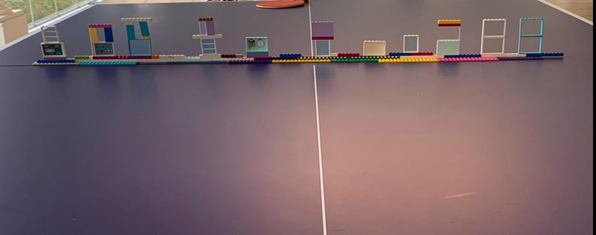
The picture caption for this article is a great example of the strength of diversity in teams. More on that later.
We often get validation from having others agree with our ideas. Phrases like, ‘Great minds think alike’ eptiomise the feel good we get from affirmation. However, there is a danger in surrounding yourself with people who think like you. It is very likely you will suffer from a lot of confirmation bias, be hostage to your blind spots and fail to truly explore innovative solutions.
However, diversity can come with its challenges. I was once part of a group tasked with addressing a challenging problem who saw the world very differently. The group comprised people from the United States, Russia, Japan, Ghana and Afghanistan and had 2 women and 4 men. They also had different styles of approaching a problem partly rooted in their cultural backgrounds and partly from their personalities. Some were loud and spontaneous; others were considered and thoughtful while the others were somewhere in between. Tensions surfaced early as opportunity to be offended was offered and quickly taken. The group reached melting point and some people refused to talk to each other. We learnt the hard way the lesson of clarifying goals, exploring differences and agreeing ways of work upfront in a group situation.
When needing to address difficult problems, having a diverse team can be very helpful. Two of the most important skills a leader should cultivate is the ability to put the right team of people together and to manage the inevitable conflict and tensions that may arise from the diversity.
It is important to regularly take the pulse of the effectiveness of your team by asking yourself whether you have the right (diverse) set of people and whether their differences are being effectively managed for optimal impact. A useful check is to assess how often you disagree and challenge each other to develop better solutions. Secondly, pay attention to the explicit and implicit norms of how the team works together; does it truly liberate critical and innovative thinking or are people holding back. Lastly look at the feedback from your target market/audience, if feedback is poor or mediocre, you are probably not getting the team composition and culture right.
Back to the picture above, it is a 9-year-olds solution to a missing table tennis net. All the adults in the room would never have thought of such a solution, but a 9-year-old (diversity in the team) thought of and executed this in 5 mins. Talk of an effective and fun solution to a problem with a quick turnaround
By Papa Sekyiamah and Oscar Paradza